How long should an explainer video be?
Short answer: 60 to 90 seconds for one idea, and under six minutes for anything educational. Here is the research behind that, and a length for every use case.
By the Chasca team 4 min read
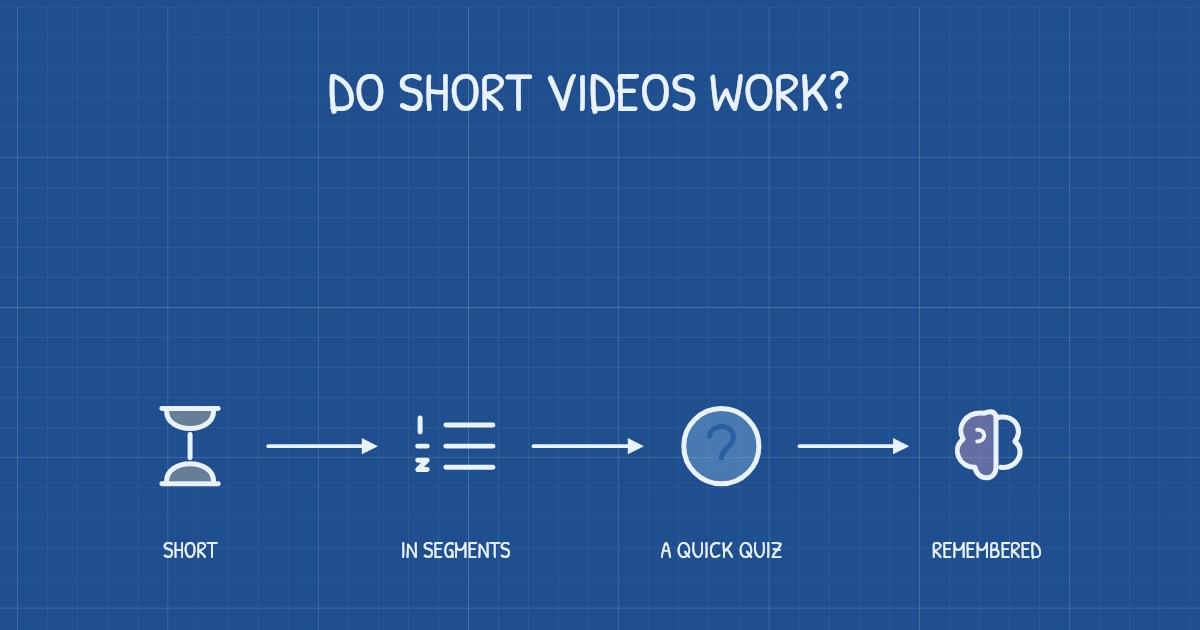
Short answer: keep an explainer video to 60 to 90 seconds when it explains one idea, and under six minutes for anything educational. If the topic needs more time than that, split it into a short series instead of making one long video.
Those numbers aren’t guesses. They come from what people actually watch, and from what they remember afterwards.
What the research says about length
The largest study of video engagement to date looked at 6.9 million viewing sessions on the edX course platform. Philip Guo, Juho Kim and Rob Rubin measured how long students kept watching and whether they went on to attempt the questions after each video. Their headline finding was simple: shorter videos are much more engaging. Engagement dropped off sharply once videos ran past about six minutes, and the authors’ first recommendation to course makers was to plan lessons as chunks shorter than six minutes.
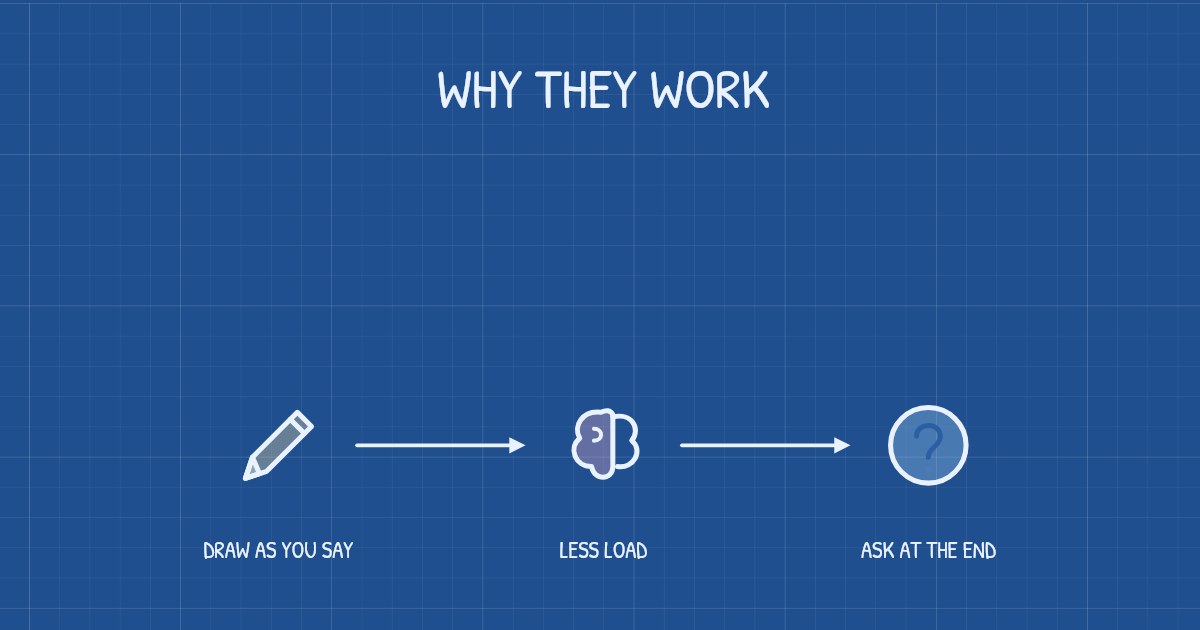
The same study found that videos drawn freehand on a tablet, in the style Khan Academy made famous, held attention better than slides. That is a big part of why the whiteboard format works in the first place.
A second line of research explains why splitting helps. A meta-analysis of the segmenting effect by Günter Daniel Rey and colleagues pooled 56 studies and found that lessons presented in short, meaningful segments produced better recall and better transfer (using the knowledge in a new situation) than the same lesson as one continuous stream. Segments also lowered the mental effort people reported.
So there are two rules, and they point the same way:
- People stop watching long videos.
- People learn more from short pieces than from one long one.
For the wider evidence, including where shorter stops helping, see do short videos help people learn?
A length for every kind of explainer
The research sets the ceiling. Below it, the right length depends on what the video has to do. These are the ranges we recommend:
| What you are explaining | Aim for | Why |
|---|---|---|
| One tip, a definition, a social teaser | 30 to 60 seconds | One idea, one picture, one takeaway. Vertical formats reward short. |
| A product, a concept or a single mechanism | 60 to 120 seconds | Enough for a hook, the idea, one example and a closing question. |
| A process, a policy or a feature tour | 2 to 3 minutes | Each step gets its own scene, with a beat to take it in. |
| A lesson on a genuinely hard topic | 3 to 6 minutes | The upper limit of what holds attention in one sitting. |
| Anything bigger | A series | Several chapters, each under six minutes, each ending with a question. |
If you are not sure, go shorter. It is much easier to add a second video than to win back a viewer who left halfway through the first.
How to hit your target length
Length is decided when the script is written, not in the edit. Narration sets the clock:
- Count words, not slides. Most narrators speak at about 140 to 160 words per minute. A 60-second video is roughly 150 words; a three-minute video is about 450.
- Leave room to breathe. A short pause after each idea gives the drawing time to land. Budget about 10% of the runtime for pauses.
- One idea per scene. A scene that tries to carry two ideas usually runs long and teaches neither well. If a scene needs a “second”, it is really two scenes.
- Cut the detours. Interesting but unnecessary facts make videos longer and, as the research on why whiteboard videos work shows, can even make them harder to learn from.
There is more on this in our guide to writing an explainer video script.
What to do when your topic doesn’t fit
Some topics really do need twenty minutes. Don’t make a twenty-minute video. Make a series:
- Split the topic at its natural joints: the steps of a process, the parts of a system, the questions a beginner asks in order.
- Keep each chapter under six minutes, and give each one its own hook and its own ending.
- End every chapter with a question the viewer answers from memory. Recalling an answer strengthens memory far more than rewatching does, which is also why a question makes a better ending than a summary.
A series has a practical bonus too: when one part changes, you update one short video instead of re-recording a long one.
How Chasca handles length
In Chasca you choose a target length before you generate, from 30 seconds to 30 minutes, or leave it on Auto and let Chasca pick one that fits the material. Past six minutes, Chasca tells the video in chapters, each with its own opening and a short recap, so even a long lesson comes in parts shorter than six minutes. Explainers and lessons end with a question and a one-line recap. To see how different lengths feel in practice, browse the examples, from sub-minute vertical videos to two-minute explainers.
Sources
- Guo, P. J., Kim, J., & Rubin, R. (2014). How video production affects student engagement: An empirical study of MOOC videos. Proceedings of the ACM Conference on Learning at Scale.
- Rey, G. D., Beege, M., Nebel, S., Wirzberger, M., Schmitt, T. H., & Schneider, S. (2019). A meta-analysis of the segmenting effect. Educational Psychology Review, 31, 389–419.
- Roediger, H. L., & Karpicke, J. D. (2006). Test-enhanced learning: Taking memory tests improves long-term retention. Psychological Science, 17(3), 249–255.
Video transcript What the narrator says in the 1:26 explainer above.
How long should an explainer be? Give one idea 60 to 90 seconds, and keep educational videos under six minutes. Think of packing a suitcase: separate compartments beat one overstuffed pocket. In 6.9 million edX viewing sessions, engagement dropped sharply past about six minutes.
Günter Daniel Rey and colleagues pooled 56 studies: meaningful segments improved recall and helped people use learning in new situations, while lowering reported mental effort. So give a tip 30 to 60 seconds; a product or concept, 60 to 120 seconds; a process, 2 to 3 minutes; a hard lesson, 3 to 6 minutes.
Count words, not slides: narrators speak at about 140 to 160 words per minute. Leave about 10% for pauses. For bigger topics, make a series: each chapter is its own compartment, under six minutes. Chasca offers 30 seconds to six minutes. What keeps a long topic learnable? Split it into short, meaningful chapters.
Questions people ask
For one idea, such as a product or a single concept, aim for 60 to 90 seconds. For anything educational, stay under six minutes. In a study of 6.9 million video-watching sessions on edX, shorter videos held attention far better, and the authors recommend chunks shorter than six minutes.
About 150 words. Most narrators speak at roughly 140 to 160 words per minute, so a 60-second script lands between 140 and 160 words, a little less if you leave pauses for the pictures to land.
Yes. A series of short chapters beats one long video. Shorter videos hold attention better, and a meta-analysis of 56 studies found that lessons split into segments improve both recall and the ability to apply what was learned.