Science teachers
Give every homework numerical its worked solution, so the student stuck on converting grams to moles watches that step instead of guessing at it.
Skills Science problems
Type the problems or drop a photo or PDF of the sheet, and Chasca makes a video that solves each one the way a science teacher does at the board: what is given and asked, the law that applies and why, units converted first and carried on every line, and the answer boxed with its unit. A free-body diagram, graph, table or Punnett square is drawn beside the working as each part is named. It is made for science teachers, tutors and exam coaching, and every answer is solved a second time before the video is made.
At a glance
Who it’s for
Give every homework numerical its worked solution, so the student stuck on converting grams to moles watches that step instead of guessing at it.
Turn a question bank for board exams, JEE or NEET into worked solutions, the options read out and the tempting wrong one explained.
Post solved problems in the language your students study in, with “Given” and “Find” written the way their textbooks write them.
How it works
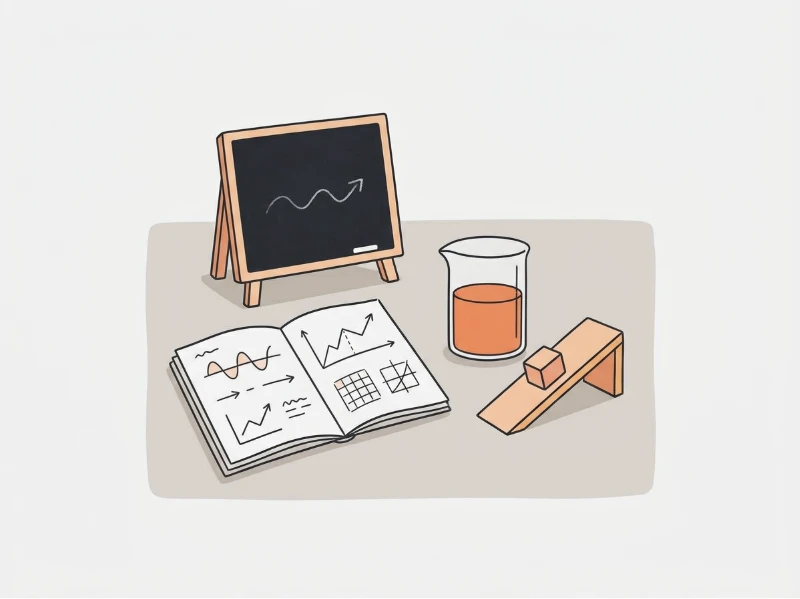
Physics and chemistry numericals, equations to balance, derivations or genetics crosses, typed or as photos or a PDF.
Each problem starts with what is given and asked, units converted first, then the law that applies and why.
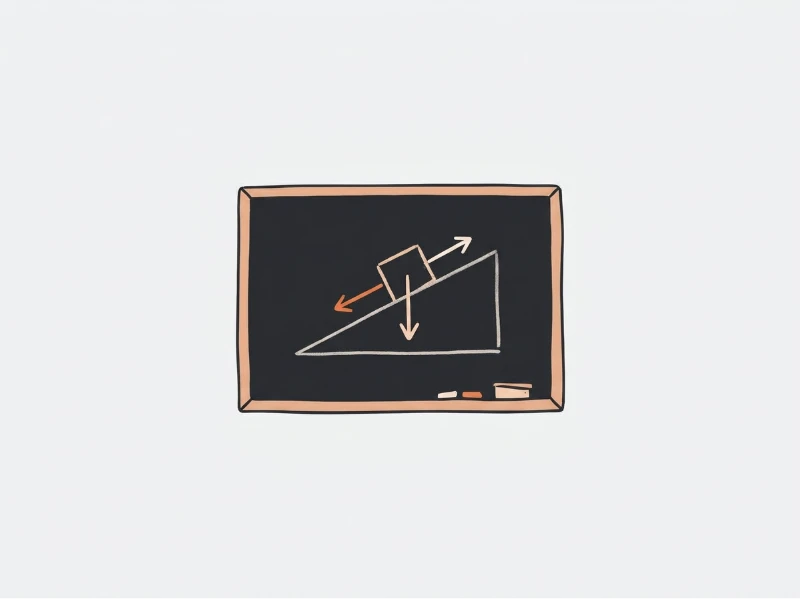
A free-body diagram, graph, table or Punnett square is drawn beside the working, part by part as it is named.
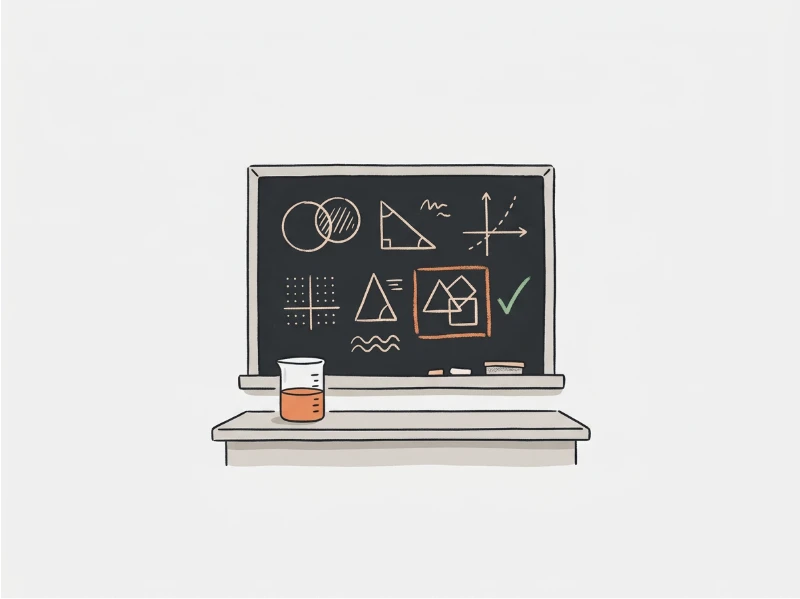
Every answer is solved twice, carries its unit on every line, and ends boxed with sensible figures.
Examples
A projectile problem with Given and Find, units on every line and the ball’s height plotted against time.
PromptA ball is kicked at 20 m/s at 45° to the ground. How far does it travel before it lands, and how high does it go? (g = 9.8 m/s²)
Made from a promptScience problemsEnglish
A physics problem in Spanish: acceleration and distance, worked line by line the way Spanish teachers explain.
PromptUn coche acelera de 0 a 25 m/s en 5 s. ¿Cuál es su aceleración y qué distancia recorre?
Made from a promptScience problemsSpanish
Atoms counted on both sides, only the coefficients changed, oxygen balanced first, then every element counted again to check.
PromptBalance: Fe + O₂ → Fe₂O₃
Made from a promptScience problemsEnglish
Two tall parents that each carry short: the gametes set out in a Punnett square, then the fraction of short plants read off.
PromptIn pea plants, tall (T) is dominant over short (t). Cross Tt × Tt: what fraction of the offspring is short?
Made from a promptScience problemsEnglish
What is given and what to find, heat as mass times specific heat times the rise, units on every line and the answer in kilojoules.
PromptHow much heat does 500 g of water need to warm from 20 °C to 80 °C? (c = 4.2 J/g°C)
Made from a promptScience problemsEnglish
A Hindi physics problem: three resistors in parallel, their reciprocals added over one denominator, the answer checked against the smallest.
Prompt2 Ω, 3 Ω और 6 Ω के तीन प्रतिरोध समानांतर क्रम में जुड़े हैं। कुल प्रतिरोध कितना है?
Made from a promptScience problemsHindi
Why we built it
In science, marks are often lost in the working rather than the idea: a unit left unconverted, a force drawn the wrong way, a ratio read off the wrong square. A worked example fixes that, but drawing the diagram and writing out every line for every problem in a question bank takes hours. We built the science skill so every problem can have its worked solution, diagram included, in the language the class is taught in.
Read why we built itYes. Chasca’s Science problems skill makes a narrated video that solves each physics, chemistry or genetics problem on a teacher’s board: what is given and asked, the law and why it applies, every line with its unit, and the answer boxed. A free-body diagram, graph, table or Punnett square is drawn beside the working when one helps.
Yes. For a forces problem it draws the body with each force pointing the way it acts, one force at a time as the narration names it. It also draws motion graphs, data tables, Punnett squares and probability or pedigree trees. Circuits and lab apparatus are not drawn yet.
Yes. It counts each element’s atoms on both sides, balances one element at a time and ends on the balanced equation. Mole and mass problems are worked with units on every line.
Yes. Add photos, a PDF or a document of the question sheet, up to 20 pages, and the problems are read from it with their options and any answer key on the page. You can also type or paste them.
Every problem is solved twice, the second time on its own, before the video is made. If you give an answer key, the video explains your answer and the second solution is compared with it. When they disagree, the video’s page tells you which problem to look at before you share it.
School and entrance-exam science, in any of the 79 languages Chasca narrates in. “Given” and “Find” are written the way textbooks of that language write them, and Arabic boards run right to left. Ask for problems on a topic without giving any, and it writes exam-style ones with numbers that work out cleanly.
From one minute to 30 minutes on a paid plan; the free videos are up to a minute. A video follows its problems, each on its own board, so several problems make a longer video.
Your first 2 videos are free, up to 1 minute each, watermarked. No card required. A skill works on the free videos too, up to a minute. After that, plans start at $9.99 a month for 30 minutes. See pricing.
More skills
Problems solved step by step on a teacher’s board, with a pointer and the answer boxed.
Code traced line by line beside the working: outputs, errors, number systems, truth tables and SQL.
Supply and demand, elasticity and costs, solved on exact graphs with every shift drawn.
Your first 2 videos are free, up to 1 minute each, watermarked. No card required. Full product, every voice and style included.