Pharmacy, nursing and medical students
Watch the drug class you are revising at work: where it binds, what it stops, and why its side effects follow. For pharmacology exams, NCLEX, USMLE, GPAT and NEET PG revision, in your own language.
Skills Pharmacology
Name a drug, a drug class or an idea like half-life, or add your lecture notes, and Chasca makes a narrated pharmacology video with the mechanism moving: the drug travels to its receptor, enzyme or channel and docks, the body’s own messenger is turned away, the knock-on effects run down the pathway, and the plasma concentration or dose-response curve is drawn as it is explained. Each side effect is tied to the step it comes from, the class is summed up with its name stem, and the video ends on a recap and a practice question, in any of 79 languages.
At a glance
Who it’s for
Watch the drug class you are revising at work: where it binds, what it stops, and why its side effects follow. For pharmacology exams, NCLEX, USMLE, GPAT and NEET PG revision, in your own language.
Add your lecture notes and get the mechanism animated in the order you teach it, ready for a flipped class, a revision session or students who missed the lecture.
A clear mechanism of action video for teaching, training and internal review in minutes, in every language your audiences speak, before you brief a studio for a launch film.
How it works
Like “how beta blockers slow the heart”, “how omeprazole stops acid” or “what a half-life means”. Your own script or your lecture notes work too, in any language.
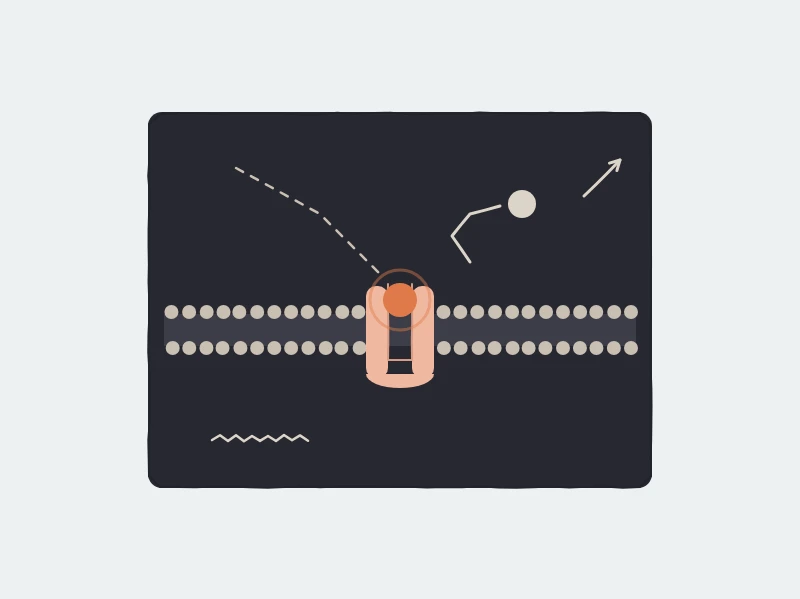
On textbook diagrams drawn for your video, the drug travels to its receptor, enzyme or channel and docks, the body’s own messenger is turned away, and ions stop flowing.
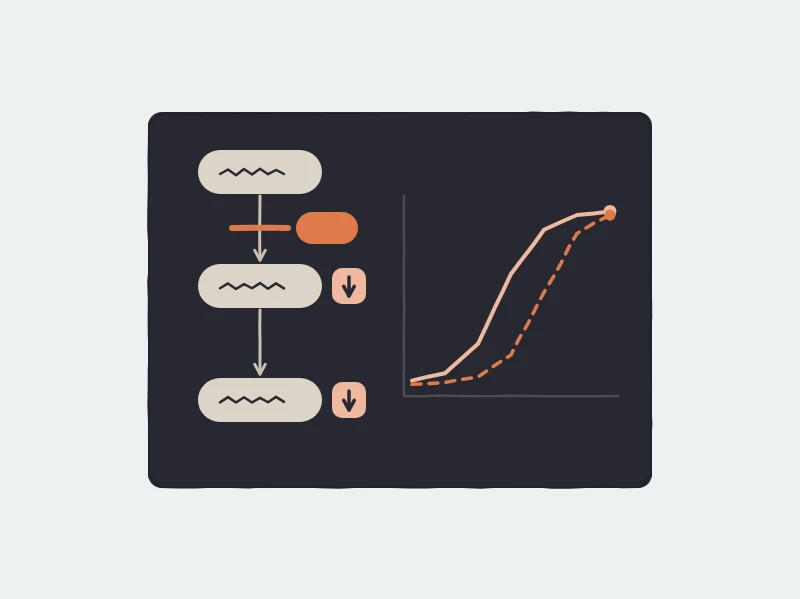
Pathways draw step by step and the drug’s effect ripples down them. Concentration and dose-response curves are computed and traced as they are explained.
Each side effect is tied to the mechanism, and the class is summed up on a card with its name stem. The pharmacology is checked before you share it.
Examples
ACE makes angiotensin II and breaks down bradykinin; lisinopril docks on it. Blood pressure falls, potassium can rise and bradykinin builds up into a dry cough, all on one pathway, then the -pril stem and an exam question.
PromptHow ACE inhibitors lower blood pressure, and why they can cause a dry cough
Made from a promptPharmacologyEnglish
Eight becomes four, then two: a four-hour half-life halving the plasma level, then a constant infusion climbing to 50, 75 and 87.5% of steady state, and about 97% after five half-lives.
PromptWhat a drug’s half-life means, and why steady state takes about five half-lives
Made from a promptPharmacologyEnglish
Omeprazole activated in the parietal cell’s acid canaliculi and binding the proton pump for good, why its effect outlasts the drug in the blood, and the -prazole stem, in Spanish.
PromptOmeprazol: cómo los inhibidores de la bomba de protones detienen el ácido del estómago
Made from a promptPharmacologySpanish
A paracetamol tablet’s journey in Arabic, right to left: absorbed in the small intestine, through the liver and the blood to the brain, its plasma curve rising and falling, then out through the kidneys.
Promptرحلة قرص الباراسيتامول داخل الجسم من البلع إلى تخفيف الألم
Made from a promptPharmacologyArabic
Why we built it
A good mechanism of action animation is made by a medical animation studio over weeks, and published prices for one short film start at about $5,000, so most drugs on a syllabus never get one, and few exist in Hindi, Arabic or Portuguese. Students learn from slides, a pathway drawn on a whiteboard, or English videos. We built Pharmacology so that any drug or idea a course covers can be shown moving, in the student’s own language.
Yes. Name a drug or a drug class in Chasca’s Pharmacology skill and it makes a narrated video: the drug travels to its target and docks, the body’s own messenger is turned away, the effects follow down the pathway, and the curve that measures the drug is drawn as it is explained. It is a teaching video in a textbook or glossy 3D look, drawn for your topic, not a 3D model built from real molecular structures.
Any drug or drug class a pharmacology course covers, from ACE inhibitors, beta blockers and statins to proton pump inhibitors, antidepressants, antibiotics and painkillers, and the general ideas: half-life and steady state, a tablet’s journey from absorption to excretion, agonists, partial agonists and antagonists, and dose-response curves.
Yes. Add up to three files of lecture slides or notes as PDFs or documents, and the video teaches them in their own order, with the mechanism animated where your notes describe it.
The video follows a textbook’s order: the physiology first, then the target, the mechanism, the knock-on effects, and uses and side effects tied to the mechanism. Curves are computed, each rise and fall on a pathway is checked against the narration, and the script and what is on screen are checked for pharmacology mistakes, with anything worth a second look noted on the video’s page. A drawing can still get a small detail wrong, so watch it through before you share it, as you would any teaching material.
A studio builds a custom film, usually 30 seconds to three minutes long, with medical review at every stage; published prices start at about $5,000 a film and often reach tens of thousands, over several weeks. Chasca makes a narrated teaching video from a sentence or your notes in minutes, in any of 79 languages, on your plan’s minutes. Use a studio for a branded launch film that goes through medical, legal and regulatory review; use Chasca to teach, revise, train and try an explanation out.
Pharmacology explains what a drug does to the body. Physiology explains how the body works on its own, from the heart and nerves to the kidneys and hormones, each process beside its graph. Visual biology covers school and university biology, from cells and DNA to food webs. A good pharmacology lesson often starts where a physiology one ends.
Yes. Pick “My words, word for word” and paste your script: every word is narrated as written, and the skill adds the diagrams, the moving drug, the pathway and the curves, timed to your words.
All 79 languages Chasca narrates in. The labels, headings, cards and graph axes are in that language too, and in Arabic they read right to left.
From one minute to 10 minutes on a paid plan, two and a half minutes by default; the free videos are up to a minute.
Your first 2 videos are free, up to 1 minute each, watermarked. No card required. A skill works on the free videos too, up to a minute. After that, plans start at $9.99 a month for 30 minutes. See pricing.
More skills
How the body works, shown moving: the heart, nerves, lungs and hormones, each beside its graph drawn in step.
Chemistry shown moving: molecules that turn in 3D, curly arrows, equations that balance themselves.
Physics, chemistry and genetics problems, units on every line and the diagram drawn beside.
Your first 2 videos are free, up to 1 minute each, watermarked. No card required. Full product, every voice and style included.